Publication
What do GTA VI, Max Payne 3 and ping-pong have in common?
Twenty years of RAGE: the economics of an in-house game engine, hypothetical Unreal royalties, technological independence and an AI-first approach.
What do GTA VI, Max Payne 3 and ping-pong have in common?
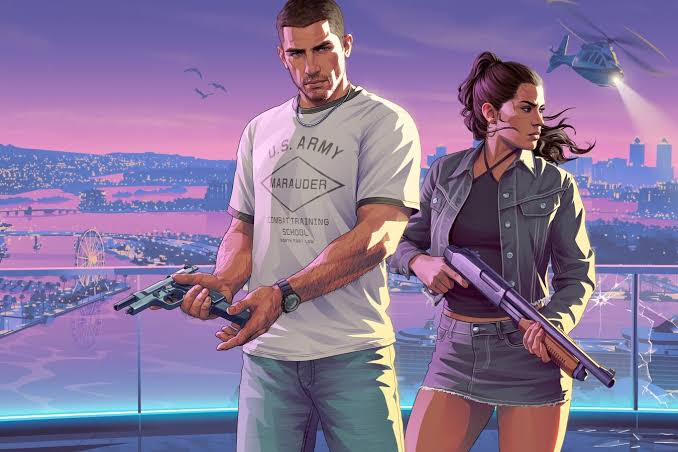
A week before release, Sensor Tower estimated GTA VI's digital preorders at roughly $1.1 billion. According to Take-Two's estimates, GTA V passed $1 billion in retail sales in its first three days after launch. What interests me is how Rockstar recoups its investment in an engine it has been using to make games for twenty years.
It all started with table tennis. In 2006, Rockstar released Table Tennis on Xbox 360, one of the first games built on RAGE. For GTA IV, the engine was adapted to Liberty City and integrated with NaturalMotion's Euphoria so characters could react to collisions and fall in different ways.
By the time Max Payne 3 came out in 2012, RAGE had become the shared engine across Rockstar's teams. Technology from GTA IV was adapted for Max's gunfights and dives. The first two games were made by Finland's Remedy. Take-Two bought the rights to the series from Remedy and 3D Realms, while Rockstar developed the third instalment.
Twenty years on, in GTA VI you can stand in the sunshine, watch a downpour in a neighbouring district, then drive there and find puddles. The team created around 600,000 animations for NPCs. Rockstar's Phil Hooker expects GTA VI's engine and tools to speed up development of future games. The studio hasn't disclosed the engine's cost or its expected time savings.
For the new Witcher game, CD Projekt RED switched from its own REDengine to Unreal Engine 5 and signed a 15-year agreement with Epic.
With your own engine, real-time rendering and world physics are your responsibility — from collisions to ragdolls. You have to stay within the frame-time budget and memory limits on PCs, consoles and sometimes mobile devices. Then, on top of that, come the level editor, model and animation importers, debugging tools and build tools.
Now imagine GTA VI running on Unreal. If royalties were charged on all preorders, Epic's standard rate of 5% on revenue above the first million dollars would add up to almost $55 million from preorders alone. Custom terms can be negotiated, but even at 1% it would still be around $11 million.
And that's just the licence. CD Projekt RED and Epic are jointly adapting Unreal for the new Witcher's open world. I think GTA VI would also have required substantial engine work, possibly alongside Epic.
Over years of development, an in-house engine team can cost just as much or more. But Rockstar gets to decide what to change in the engine for a particular game, and when. Some code and tools are reused, but GTA V and GTA VI are 13 years apart. In that time, Rockstar rebuilt core open-world systems, including how witnesses react to crimes. How much work did the old engine save, and how much did rebuilding it add?
Just to give a sense of scale: BigWorld was used in several games, including World of Tanks. In 2012, according to GamesBeat, the company behind the technology was acquired for $45 million. Gaijin, meanwhile, has been developing Dagor since 2002. It powers War Thunder and Enlisted. We can only guess how much money has been poured into that engine since then.
For Korea, 1C Game Studios built a new engine with improved flight and damage modelling. The flight area alone is 440 × 440 km. The IL-2 series will outlive us all.
For Russian studios, an in-house engine would make it possible to release games and patches even if Unity or Epic restricted access to their services. That independence is expensive even at a national scale. You need to maintain a team for years, support new hardware and help studios migrate projects.
If I were building an engine today, I'd make it AI-first. In Unreal Engine 5.9 Preview, Epic expanded MCP capabilities and added the experimental Unreal Canvas for working with agents. Unity, whose MCP we wrote about, moved it into Unity CLI. My benchmark: an agent should be able to build at least an A+-tier game from scratch and make the required changes to a large AAA project without breaking anything.
With your own engine, you can rework anything from rendering to physics. Make the world bigger? Put hundreds, even thousands of NPCs on screen? Slow, expensive and incredibly flexible!
Fellow game developers, which part of your technology would you definitely keep in-house today, even if you were building the game itself in Unreal or Unity? If you've already faced that decision on a project, tell us how it worked out in money or time.